
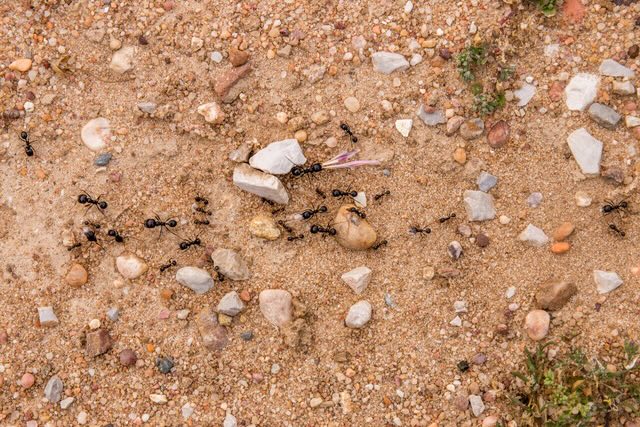
Spring in Ocean County often brings a familiar nuisance inside the house. After the winter months pass, many homeowners begin seeing ants inside on the kitchen counter, along walls, or near food. A few ants may not seem like much at first, yet those tiny creatures can signal a much larger ant colony living nearby.
Understanding why ants appear in homes in spring helps homeowners prevent infestations and choose the best course for controlling ants before the problem grows.
Cold weather forces many insects to stay hidden in soil, trees, or outdoor nests. As temperatures rise in spring, ants become active again and begin searching for food sources and water.
Worker ants leave the nest to feed the colony. Their job is to locate food, bring it back, and help the colony survive. Once a worker finds food in a house, it leaves a scent trail that guides more ants to the same location. That is why a few ants can quickly turn into more ants moving across a kitchen counter or floor.
Spring is also when colonies begin expanding. A mature ant colony produces larvae and eggs that develop into more workers. As the population grows, ants begin searching for additional shelter and suitable nesting sites. Homes provide warmth, protection, and reliable food, which makes them attractive to invading insects and often leads to misconceptions about which bugs are true pests.
Common Ant Species Found in New Jersey Homes
Not all ants behave the same way. Several ant species commonly cause an ant problem in Ocean County homes.
Carpenter Ants – Carpenter ants are among the largest black ants seen indoors. Unlike termites, they do not eat wood. Instead, they tunnel through water damaged wood to create nesting sites.
Homes with moisture issues, leaking windows, or damp framing may attract carpenter ants looking for shelter. Large colonies may include satellite colonies in different areas of the structure, making the infestation harder to eliminate.
Odorous House Ants – Odorous house ants are very common in New Jersey. These small ants often appear in kitchens and bathrooms searching for food or water. When crushed, they produce a distinct odor.
Because of their small size, these ants enter through tiny entry points in foundations, siding, or around utility lines.
Pharaoh Ants – Pharaoh ants are another indoor ant type that can spread quickly. Colonies can split and form satellite colonies if disturbed. This behavior makes DIY solutions like bug spray ineffective and sometimes leads to a larger infestation.
Fire Ants and Other Ant Types – Fire ants are less common in New Jersey but can still appear in certain areas. Many different species live throughout the region, and proper ant control depends on identifying the ant type and understanding how that colony behaves.
Why Ants Invade Kitchens and Living Spaces
Ants feed on sugars, grease, and protein. Even small crumbs or residue left behind on a kitchen counter can attract workers searching for food.
Common indoor food sources include:
- uncovered food
- pet food bowls
- sugary drinks
- grease or crumbs
- improperly stored pantry items
Ants can detect these food sources from far away. Once worker ants locate food, they return to the nest and guide more workers back to the location.
Homes also provide stable shelter during changing spring weather. Cracks in walls, gaps around pipes, or openings near windows create easy entry points for ants entering the structure.
Where Ant Colonies Live Around Homes
Many homeowners assume ants are nesting inside the house, yet outdoor nests are often responsible for the problem.
Common nesting sites include:
- soil near the foundation
- under patios or walkways
- inside tree stumps
- beneath landscaping stones
- inside hollow trees
Carpenter ants may build nests inside water damaged wood within walls, decks, or window frames. Colonies can also establish satellite colonies in separate locations connected to the main nest.
Because of this, treating only the ants seen indoors rarely removes the entire colony.
Why DIY Methods Often Fail
Many homeowners try DIY methods first. Spraying visible ants with bug spray may kill a few workers, yet it does not reach the queen ant or the nest where eggs and larvae develop.
Ant traps and store bought ant baits can sometimes reduce activity temporarily. If the product is not matched to the correct ant species, the colony can survive and ants return shortly after treatment.
Some ant types respond to disturbance by splitting into multiple colonies. This can make the infestation worse and spread the ants to other areas of the house.
Effective ant control requires locating nesting sites and targeting the entire colony, including the queen and developing larvae.
Steps Ocean County Homeowners Can Take to Deter Ants
Homeowners across Ocean County can reduce the chances of an infestation with a few prevention steps.
Eliminate Food Sources – Keep food sealed in airtight containers and clean kitchen surfaces regularly. Wipe crumbs and spills from the kitchen counter and store pantry items properly.
Maintain a Clean Home – Keeping the home clean removes the food that attracts ants and other pests like cockroaches, spiders, and insects.
Seal Entry Points – Inspect areas around windows, doors, and utility lines. Sealing cracks and gaps can prevent ants enter the house through small openings.
Manage Outdoor Conditions – Trim trees and branches that touch the structure. Reducing moisture and removing debris helps limit suitable nesting sites near the home and can also reduce problems with stinging insects around the property.
When to Call a Pest Control Professional
Seeing a few ants indoors during spring may not seem serious. In many cases, those workers are only a small portion of a much larger colony nearby.
When ants continue appearing indoors, professional residential pest control is often the most effective method for getting rid of the infestation.
A trained technician can determine the ant species, locate nesting sites, and use targeted treatments designed to eliminate the entire colony.
If ants keep invading your house this spring, local NJ pest control experts can help get rid of the problem and prevent infestations from returning.