
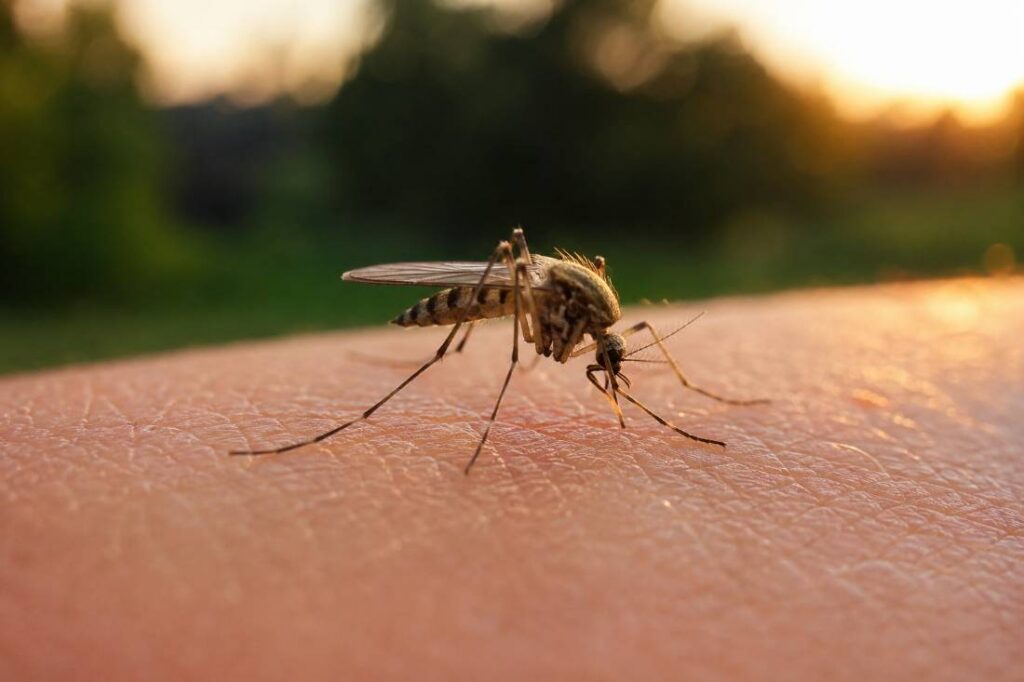
Mosquitoes are part of every New Jersey summer. Most people accept them as an unavoidable nuisance and move on. However, the health risk behind a single bite deserves a closer look.
West Nile virus is the leading cause of mosquito-borne disease in the United States, and New Jersey sees cases every year. Understanding the connection between mosquitoes and this virus puts homeowners in a better position to protect their families.
What Is West Nile Virus
West Nile virus is transmitted to humans through the bite of an infected mosquito. The virus does not spread person to person. Instead, mosquitoes contract it by feeding on infected birds and pass it along during subsequent bites. Most people who are infected never develop symptoms at all. According to the Centers for Disease Control and Prevention, roughly one in five infected individuals develops a fever along with other symptoms.
Symptoms That Should Prompt Attention
Common symptoms include fever, headache, body aches, joint pain, and fatigue. Some people also develop a rash or swollen lymph nodes. Symptoms typically appear between two and fourteen days after a bite. In most cases, recovery is full and relatively quick. However, one in 150 infected individuals develops a severe neurological illness. Older adults and people with compromised immune systems face the greatest risk of serious complications.
Severe cases can involve encephalitis or meningitis, both of which are life-threatening conditions. Fatigue and weakness can persist for weeks or months even after other symptoms resolve. Taking mosquitoes seriously is not an overreaction — it is a reasonable response to a documented risk.
West Nile Activity in New Jersey
New Jersey health officials track West Nile activity closely throughout mosquito season. The virus has been detected in mosquito pools across all 21 counties in the state. In 2024, New Jersey reported 41 human cases and eight deaths — a notably difficult year. In a typical season, the state sees around 14 confirmed human infections. Cases tend to peak between mid-August and mid-September.
The virus circulates among birds long before human cases are reported. Detection in mosquito pools is often the earliest warning sign. Local health departments test mosquito populations throughout the season and issue alerts as activity increases. That monitoring provides valuable context, but it does not reduce the risk for individual homeowners and their yards.
Why Mosquito Populations Thrive in This Region
New Jersey’s warm, humid summers create ideal conditions for mosquito breeding. Standing water is the single most important factor. Even small amounts — a clogged gutter, a bird bath, a tarp with pooled rainwater — can support a breeding cycle. Mosquitoes can complete development from egg to adult in as few as seven to ten days under favorable conditions.
Common Breeding Sources Around the Home
Properties with mature landscaping, low-lying areas, and wooded borders tend to see higher mosquito pressure. Some sources are obvious, like ornamental ponds and rain barrels without tight-fitting lids. Others are easy to overlook. Flower pot saucers, tarps, children’s toys, and even folded patio furniture can collect enough water to support breeding. Addressing these sources is the most immediate step a homeowner can take.
Gardens with dense ground cover and areas that stay shaded and moist throughout the day also provide daytime resting spots. Adult mosquitoes hide in these areas and become active again in the evening hours.

Protecting Your Property From Mosquitoes
Several practical steps help reduce mosquito activity around the home. None of them require specialized equipment or professional knowledge. Combined, they can significantly lower the number of mosquitoes present on a given property.
Drain or dump any standing water at least once a week. Clean gutters regularly to prevent blockages that cause water to pool. Store items that collect water upside down when not in use. Change water in bird baths every few days. Keep grass trimmed short and cut back overgrown vegetation along fence lines and borders.
Personal protection matters as well. Use an EPA-registered repellent containing DEET, picaridin, or oil of lemon eucalyptus when spending time outdoors. Wear long sleeves and pants during peak mosquito hours, typically dawn and dusk. Keep doors and windows screened and in good repair.
When Yard Management Is Not Enough
Eliminating standing water and trimming vegetation helps, but it does not fully address established mosquito populations. Properties with wooded borders, neighboring wetlands, or consistently high activity often benefit from professional treatment. Targeted barrier applications to shrubs, ground cover, and wooded edges can significantly reduce adult mosquito populations.
Before scheduling any service, knowing what to look for in a pest control provider matters. What NJ homeowners need to know about pest control practices is a good starting point for anyone comparing options or asking the right questions.
Professional service also accounts for breeding sources that are difficult to identify or treat independently. Drainage areas, tree holes, and low spots in lawns can support breeding even after a homeowner has addressed the obvious sources.
How Dan Can Home Services Approaches Mosquito Control
Dan Can Home Services has been protecting homes and businesses throughout Burlington, Ocean, and Mercer County since 2023. Fully licensed by the New Jersey DEP, the team brings accountable, professional service to every property. The approach to mosquito control starts with a property assessment. Conditions that support breeding and resting are identified before any treatment is applied. That assessment shapes a targeted plan rather than a one-size-fits-all spray schedule.
Treatments focus on the areas where mosquitoes actually spend their time — dense vegetation, wooded borders, and shaded resting zones. Ongoing service throughout the season maintains results as mosquito populations continue to cycle. Mosquitoes are not the only warm-weather threat worth addressing. The lone star tick is now established across New Jersey and carries its own serious health risk. Many homeowners choose to combine mosquito and tick control services since both pests share similar habitat and active seasons.
For homeowners dealing with broader pest pressure, general pest control services are available alongside seasonal mosquito programs. The goal is straightforward: a yard where families can spend time without worrying about what is biting them.
Take Mosquito Season Seriously This Year
West Nile virus is not a distant concern. It is present in New Jersey every summer. The mosquitoes in your yard right now are part of the same population that health officials track and test each season. Simple prevention steps help, and professional treatment helps further. The combination of both offers the most reliable protection for your family and your property.